Talking Hearts Font J-R: A Designer’s Review
As an embroidery designer who has spent years digitizing and testing fonts for commercial use, I approach every new machine embroidery design with a critical eye. It is not enough for a font to look cute on a screen; it must perform under the needle. Recently, I evaluated the Talking Hearts Font Lowercase J to R specifically for its potential in small business merchandise and branded patch applications. This review focuses on how this specific segment of the alphabet functions in real-world scenarios, from boutique branding to staff uniforms.
First Impressions: Visual Personality and Brand Fit
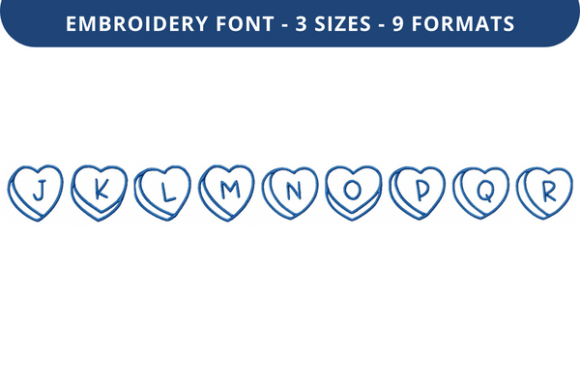
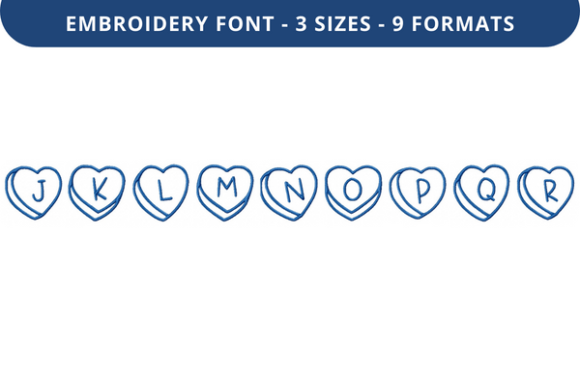
The first thing you notice about Talking Hearts Font Lowercase J to R is its distinct personality. It does not strive for rigid corporate minimalism. Instead, it offers a playful, handmade aesthetic that feels warm and inviting. For brands in the lifestyle, bakery, florist, or creative studio sectors, this visual tone is invaluable. It bridges the gap between professional polish and approachable charm.
When considering brand identity, consistency is key. This font segment carries a decorative weight that suggests care and attention to detail. It feels less like a mass-produced label and more like a signature. For Etsy sellers and crafters, this distinction is crucial. The design implies that the finished product was created with intention, which can significantly enhance perceived value. However, because it is decorative, it requires careful placement. It is not a utility font for dense informational text but rather a spotlight element for names, short quotes, or logo accents.
Real-World Applications for Small Business Merch
To truly understand the utility of this embroidery file, we must look at where it shines in a commercial setting. I tested the concept of using these letters for various small business merch items. Here is how Talking Hearts Font Lowercase J to R performs across different mediums:
- Embroidered Patches: This is perhaps the strongest use case. The decorative nature of the font translates beautifully into a standalone patch. Imagine a local café using the letter "J" for "Java" or "R" for "Roast" on a circular patch sewn onto canvas tote bags. The heart motifs within the letters add texture without requiring excessive stitch density, making it durable for daily use.
- Apron Embroidery: For bakeries and florists, staff aprons are walking billboards. Embroidering a staff member’s name or a short slogan using this font adds a personal touch. The lowercase style feels friendly and service-oriented, helping to build customer trust through a welcoming visual cue.
- Cap Embroidery: Using these letters on the front of a cap requires precision. Because caps have a curved surface, the design must be scaled correctly. The Talking Hearts Font Lowercase J to R works well here if used as a monogram or a single initial. It avoids the clutter that often plagues complex logos on headwear.
- Tote Bag Design: Canvas totes are staples for boutiques. This font allows for personalized messaging. Whether it is a date for a special event or a brand name, the readability remains high even from a distance, provided the thread color contrasts well with the fabric.
While the product category mentions Back To School, this font’s versatility extends far beyond seasonal trends. It is suitable for year-round custom apparel and gift items. For example, a pet brand could use these letters to create personalized collar tags or bandanas, leveraging the playful aesthetic to appeal to pet owners.
Technical Considerations and Production Notes
From a technical standpoint, working with decorative fonts like Talking Hearts Font Lowercase J to R requires attention to detail. As a designer, I always advise checking the specific stitch density before running a full production batch. Decorative elements can sometimes create bulk, especially if the design includes satin stitches that overlap significantly.
Here are my practical notes for ensuring a high-quality commercial embroidery result:
- Test on Real Fabric: Never rely solely on a printable mockup. Stitch out the design on the actual material you plan to use. Fabric texture plays a huge role in how the hearts and curves render. A rough linen will behave differently than a smooth polyester twill.
- Stabilizer Selection: Given the decorative nature, proper stabilization is non-negotiable. Use a cut-away stabilizer for garments that will undergo frequent washing, such as staff uniforms. For patches, a heavy tear-away or wash-away backing might suffice, depending on the final application.
- Thread Color Contrast: This font relies on shape recognition. If you use a thread color too similar to the fabric, the intricate details of the hearts may get lost. High contrast is your friend here. Test black on white and white on black to see how the definition holds up.
- Hoop Size and Scaling: Ensure the design fits within your standard hoop size without excessive jumping or trimming. If you are creating a series of patches, consistency in scaling is vital for brand recognition.
- Check File Details: The product description states this is a high-quality design for personalizing fabrics. However, it does not specify exact stitch counts or file formats in the snippet provided. Always verify the digital embroidery file format compatibility with your machine (such as PES, DST, or JEF) and confirm commercial licensing terms before selling products made with this font.
Strategic Use for Brand Recognition
Using Talking Hearts Font Lowercase J to R is not just about aesthetics; it is a strategic business decision. In the crowded marketplace of handmade goods, visual consistency builds trust. When a customer sees the same distinctive font on your packaging, your social media graphics, and your physical products, it reinforces brand recall.
For design assets, this font can serve as a cornerstone. You can use it for limited edition runs, holiday specials, or personalized customer gifts. The emotional connection fostered by a "handwritten" or decorative style can lead to higher engagement on social media. Customers are more likely to share photos of a beautifully embroidered tote bag or a unique patch than a generic printed item.
However, use it carefully. Avoid using this font for tiny lettering where the details might merge. It is not suitable for long paragraphs of text. Reserve it for impact moments: the hero logo on a chest pocket, the centerpiece of a patch, or the focal point of a gift item. By treating this font as a premium accent rather than a workhorse text, you elevate the perceived quality of your entire product line.
Final Verdict for Embroidery Professionals
The Talking Hearts Font Lowercase J to R is a strong contender for businesses looking to add a layer of warmth and personality to their merchandise. It excels in applications where space is limited but impact is required, such as patches and caps. Its performance in apron embroidery and tote bag designs further cements its utility for service-based small businesses.
Remember, the success of any machine embroidery design lies in the execution. Take the time to test, adjust tension, and select the right materials. When used correctly, this font becomes more than just letters; it becomes a recognizable symbol of your brand’s commitment to quality and charm. For those in the Embroidery industry looking to expand their design assets with something that balances professionalism with playfulness, this font segment is worth integrating into your library.